Table of Contents ▼
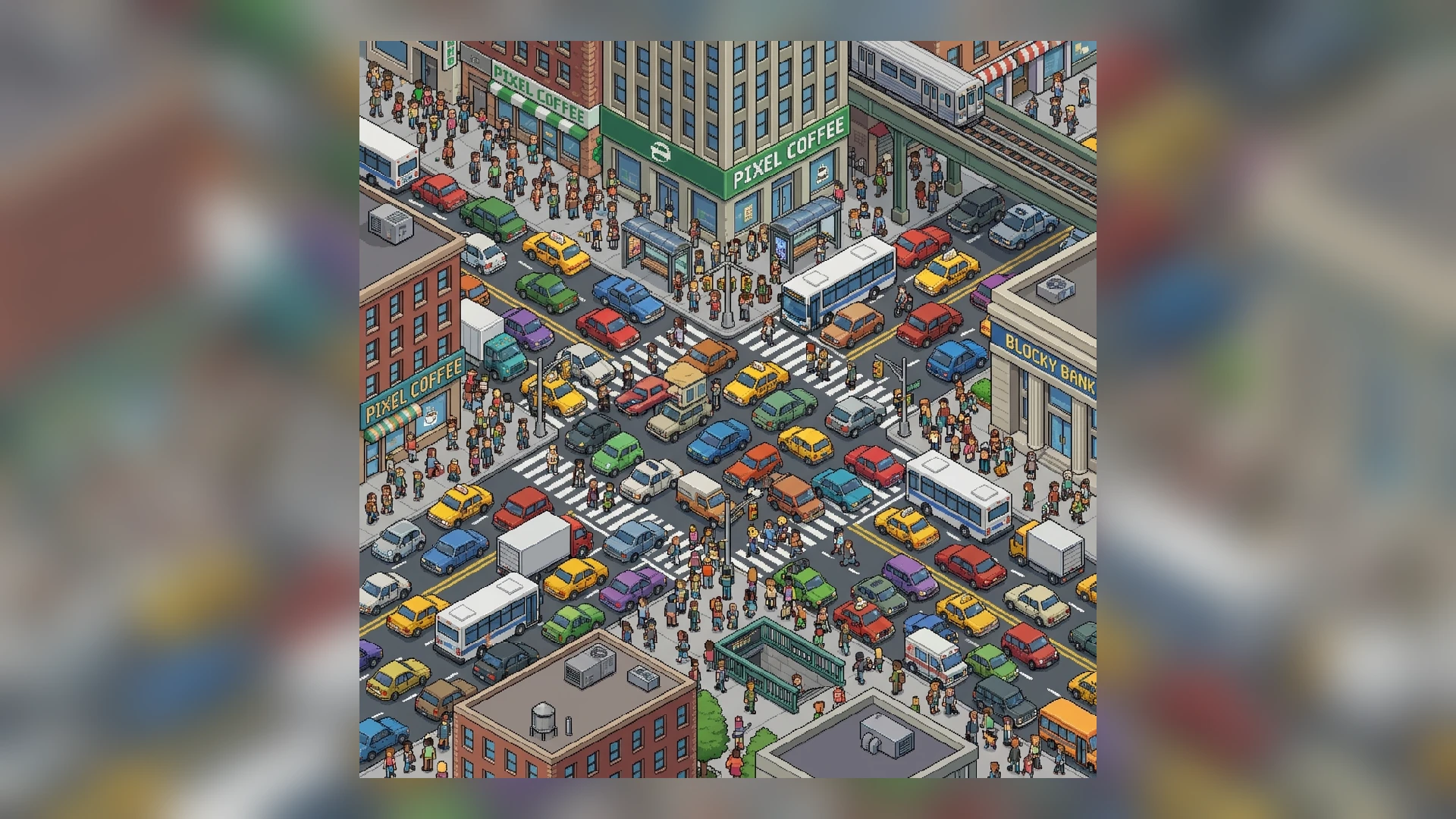
Traffic is the #1 killer of cities in Theotown. As your population grows, so does the number of cars. If you don’t manage your road network effectively, your service vehicles (ambulances, fire trucks, police) will get stuck, leading to burnt-down buildings and sick citizens. Eventually, land value crashes, and your city dies.
This comprehensive guide will walk you through everything you need to know to keep your city moving, from simple road hierarchy to complex interchange designs.
1. The Golden Rule: Road Hierarchy
The biggest mistake new players make is building a giant grid of the same road type. This works for a village, but fails for a metropolis. You must use a Road Hierarchy. Think of it like a tree: the trunk supports branches, which support leaves.
The Levels of Hierarchy
Local Roads (The Leaves):
- Type: Dirt Roads or Country Roads.
- Purpose: Provide direct access to houses and shops.
- Speed: Low.
- Connections: Should only connect to collector roads. Never connect these directly to a highway!
- Strategy: Keep these short. Don’t create long “rat runs” where cars speed through neighborhoods to cheat traffic.
Collector Roads (The Branches):
- Type: Standard Two-Way Roads or Avenues.
- Purpose: Collect traffic from local neighborhoods and move it to arterials.
- Speed: Medium.
- Connections: Connect local roads to arterials.
- Strategy: Avoid zoning buildings directly on busy collector roads if possible, or limit them to commercial use.
Arterial Roads (The Trunk):
- Type: Expressways or Large Avenues.
- Purpose: Move massive amounts of traffic across the city quickly.
- Speed: High.
- Connections: Only connect to Collectors or other Arterials.
- Critical Rule: NEVER ZONE buildings facing an arterial road. Cars stopping to park will block thousands of vehicles behind them.
2. Intersection Management
An intersection is a bottleneck. It is the only place where traffic has to stop. Your goal is to keep traffic flowing without stopping.
The Problem with 4-Way Junctions
A standard 4-way intersection ("+") is the most inefficient design. Cars have to cross three potential paths of conflict. Traffic signals here are slow.
The Solution: Use 3-way junctions (“T-intersections”). A “T” junction has fewer collision points and flows faster.
The Roundabout
Roundabouts are excellent for medium-density areas. They force traffic to flow in one direction, eliminating left-turn waits (in right-hand traffic systems).
- When to use: Connecting a Collector to an Arterial.
- When NOT to use: On a massive highway intersection. The volume will lock up the circle.
Highway Interchanges
When two highways meet, don’t use traffic lights. You need bridges and ramps.
- The Diamond: Simple, cheap, but can jam at the ramp terminals.
- The Cloverleaf: Handle high speed without stopping, but takes up huge space.
- The Turbine: The most efficient stock design, but expensive and massive.
[!TIP] Download “Road Tool” and “Intersection Marking” plugins to gain fine control over lane turning rules.
3. Public Transport is King
You cannot build your way out of traffic with just more lanes. “Induced Demand” is real in Theotown simulation. More lanes = more cars. The only real fix is to get Sims out of cars.
Bus Networks
Buses are your first line of defense.
- Depots: Build one per district.
- Stops: Place them every 4-6 blocks. Sims won’t walk forever.
- Routes: Create loop lines. Do not make line A go from top to bottom and Line B go left to right without connecting. They must transfer passengers.
Train and Metro
For moving Sims between separate cities (regions) or distinct districts (Residential -> Industrial Zone).
- Metros: Great because they are underground and save surface space.
- Strategy: Place a large metro station in your dense residential center and another at the gate of your industrial park. Watch thousands of cars vanish from the road.
4. Advanced Strategy: The “Couplet”
When you unlock high density, standard avenues fail. The “Couplet” system involves running two one-way roads parallel to each other, separated by a block of buildings or a park.
- One road goes North.
- One road goes South.
This effectively creates a giant avenue with a huge median in the middle. It eliminates left-turn blocking (since you can only turn one way) and doubles the capacity of your arterial network.
5. Industrial Traffic Management
Industrial zones generate “Heavy Traffic” (Trucks). Trucks are slow and long.
- Isolation: Give your Industrial zone its own dedicated highway entrance/exit. Do not force trucks to drive through the city to get to the highway.
- Cargo Trains: Use cargo train stations to export goods without using trucks. This massively reduces highway load.
Conclusion
Traffic in Theotown is a puzzle. Start small, respect the hierarchy, and don’t be afraid to bulldoze a neighborhood to widen a road. Your citizens might complain about the noise, but they will thank you when they can actually get to work on time.
For more on making money to afford these expensive highways, check our Economy Guide.