Table of Contents ▼
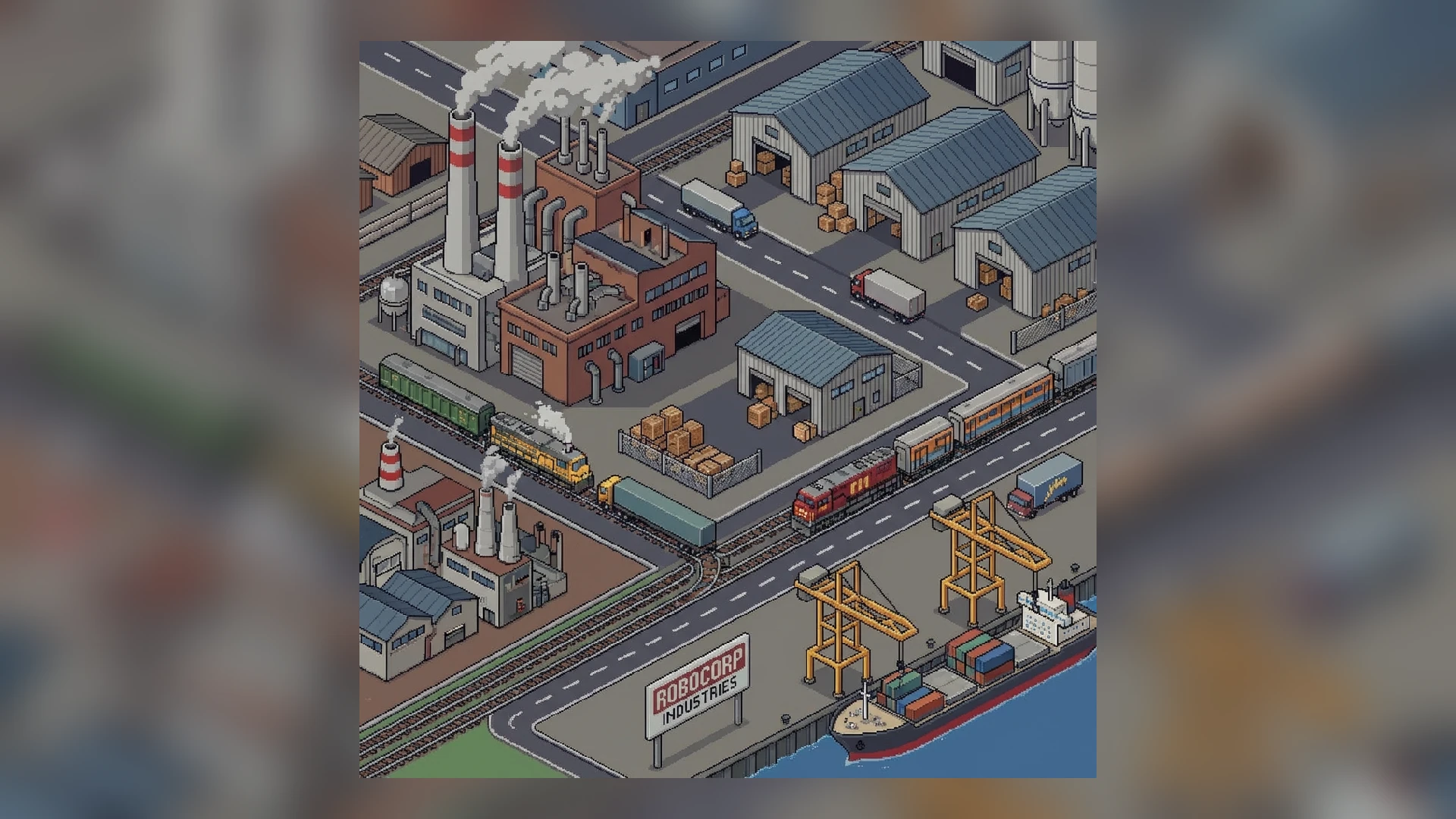
Industry is the engine of your city. It provides the jobs that pay your citizens, who in turn pay you taxes. However, it is a double-edged sword. A poorly managed industrial sector will choke your city with smog, gridlock your streets with trucks, and lower land value across the map.
This guide explains how to manage industry throughout the three major game stages: The Dirty Age, The Transition, and The High-Tech Future.
1. The Early Game: The Necessary Evil
At the start of the game, your citizens are uneducated (no schools yet). They can only work in “Dirty Industry” zones.
Characteristics of Dirty Industry
- Pollution: High. It emits a purple smog radius.
- Noise: High.
- Traffic: Heavy. Generates large trucks that move slowly.
- Income: Low to Medium.
Placement Strategy
You must treat Dirty Industry like a contagous disease.
- Wind Direction: Check the wind map. Place industry downwind so the smoke blows off the map, not into your residential zones.
- The “Buffer Zone”: Never place industry next to homes. Create a buffer layer.
- Industry -> Warehouses/Commercial -> Parks -> Residential.
- Road Access: Industry needs direct highway access. If trucks have to drive through downtown to get to the highway, your traffic will collapse. See our Traffic Guide for dedicated industrial interchange designs.
2. The Alternative: Agriculture (Farming)
If you have valid plugins or the farming zone unlocked, this is a fantastic alternative for the early game.
- Pros: Zero pollution. Increases nearby land value. Looks beautiful.
- Cons: Extremely low density. You need huge fields to employ a few people.
- Strategy: Use farming “filler” in the empty spaces between your main city and the industrial district. It acts as a productive green belt.
3. The Mid-Game: Manufacturing
As you build Elementary Schools and High Schools, your workforce becomes “Educated”. They will demand better jobs.
The Transition
Your dirty factories won’t upgrade automatically overnight. You often need to “encourage” them.
- Bulldoze: If you have high education but still have smokestacks, manually bulldoze the dirty buildings.
- Regrowth: If the conditions are right (less pollution, better roads), they will respawn as “Manufacturing” (Orange) buildings.
- Benefit: Manufacturing produces less pollution than dirty industry, but it is not perfectly clean.
4. The End-Game: High-Tech (TT) Industry
This is the goal. High-Tech zones look like office parks, laboratories, and server farms.
Unlocking High-Tech
You cannot just zone this. You need to meet strict criteria:
- Education: You must have a University. The workforce must be highly educated.
- Land Value: High-Tech hates dirt. You need parks or plazas nearby.
- Services: Police and Fire coverage must be 100%.
- Pollution: Zero. You cannot build High-Tech next to a coal power plant.
The “Silicon Valley” Layout
Unlike dirty industry, you can place High-Tech zones near residential areas.
- Synergy: Wealthy citizens (TTT Residents) like to live near High-Tech jobs.
- Strategy: Build a “Science City” district.
- Center: University & DSA Headquarters.
- Ring 1: High-Tech Zones.
- Ring 2: High-Density Wealthy Residential.
- Transport: Connect it all with a Metro System.
5. Supply Chains & Resources
Theotown has a resource mechanics layer.
- Supplies: Industrial zones produce generic “Supplies”.
- Usage: These are used by the DSA (Daily Space Agency) to build rockets.
- Transport: Supplies must physically travel from the factory to the DSA Hangar.
- Logistics: Ensure the road from your Supply Hub to the DSA is a high-speed expressway.
Raw Material Extraction
On some maps, you can mine resources.
- Oil: requires Oil Rigs.
- Ore: Requires Quarries.
- Profit: These are essentially “free money” generators but are finite or space-consuming.
Conclusion
Don’t let your industry stay in the 19th century. Your job as mayor is to educate your population so they can move from working in coal mines to designing spaceships. Constant upgrading of your industrial zones is the key to a healthy, wealthy, and smog-free city.